
New £26m Mersey Ferry on the river for the first time
After months of construction at Cammell Laird, the new £26m Mersey Ferry – Royal Daffodil – takes to the river for the first time as Metro Mayor Steve Rotheram reveals which of the two existing ferries is for the chop. Tony McDonough reports
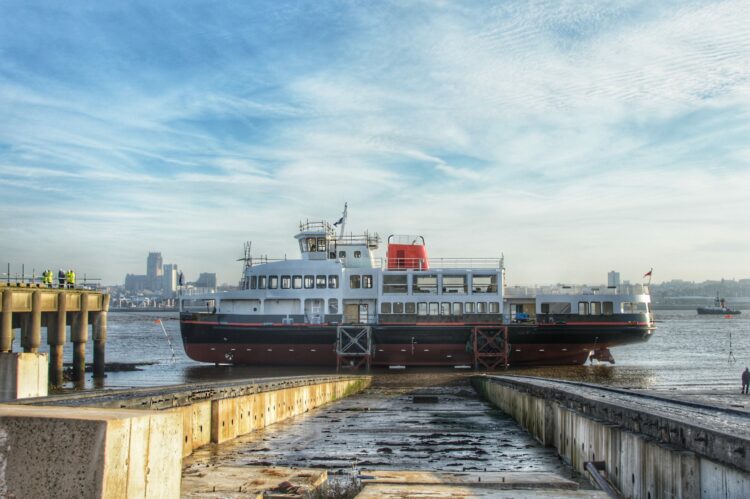
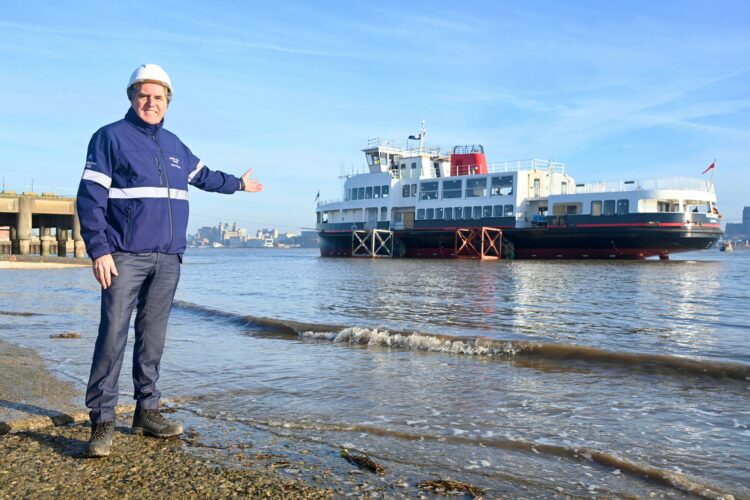
Metro Mayor Steve Rotheram watched the new £26m Mersey Ferry – Royal Daffodil – take to the river for the first time on Thursday morning.
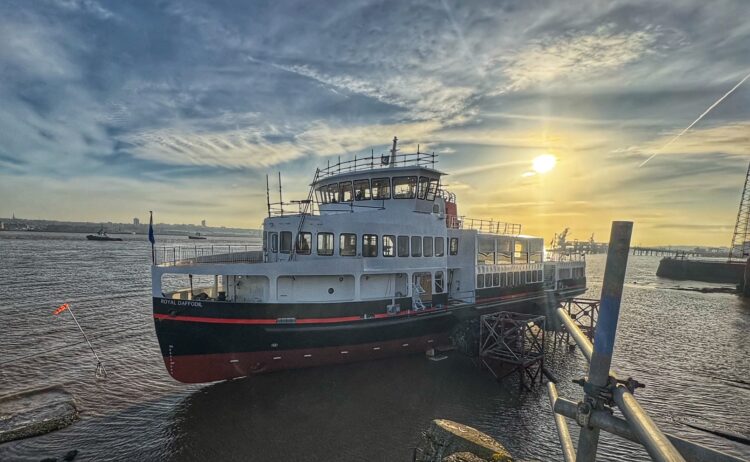
Royal Daffodil has been under construction at the Cammell Laird shipyard in Birkenhead since January, the first new ferry built for more than 60 years. On Thursday morning in front of the Mayor and the media, the vessel was floated on the Mersey for the first time.
Her engines have not yet been installed so tug vessels pulled the boat on a short journey along the river and into Cammell Laird’s wet basin where workers will finish the build in time for her to come into service in summer 2026.
In an interview with LBN, Mr Rotheram spoke of his pride at seeing Royal Daffodil on the Mersey for the first time. The vessel is being funded by the Liverpool City Region Combined Authority.
He said: “It is an historic day. We have had a crossing on the Mersey for around 800 years and so this is a modern version of the traditional ferry and I think people will be impressed when they get on it.
“Royal Daffodil is now a symbol of our pride, progress and the world-class skills of our local workforce. Built right here in Liverpool city region, she’s cleaner, greener, and ready to carry this proud tradition into the future for many years to come.”
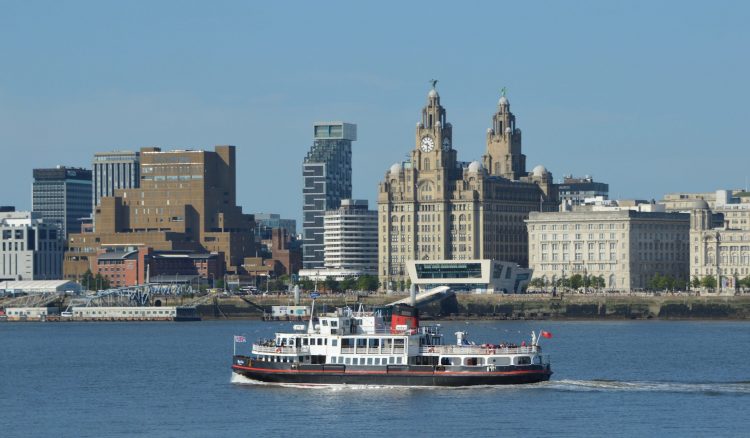
And Mr Rotheram also revealed for the first time which of the two existing 60-year-old vessels – Royal Iris and Snowdrop – would be taken out of the service when Royal Daffodil is introduced into service next year. It is Royal Iris that is for the chop.
“So the Dazzle Ferry (Snowdrop) will be staying and what we are going to do is take some of the parts from Royal Iris to use in Snowdrop. We will look to see if we can do similar to what has been done with the original Daffodil – maybe on the Wirral side of the river.”
He was referring to the previous Royal Daffodil which has been converted into a multi-million pound bar and restaurant attraction in Canning Dock, next to Royal Albert Dock, by entrepreneurs Philip Olivier and Joshua Boyd.
When commissioning the vessel the Combined Authority decided against an all-electric ferry, a decision likely based on higher cost of construction and the extra expense of having to install charging infrastructure on the Mersey.
Although Royal Daffodil will initially burn diesel it is being future-proofed so it can be converted to run entirely on electric at a later date.
READ MORE: Mayor takes helm of £26m Mersey Ferry… virtually
Cammell Laird, which has previously built 15 Mersey Ferries dating back to 1836, is installing a diesel-electric hybrid-ready engine, designed to be adaptable for future conversion to full electric propulsion.
Royal Daffodil will also be using the Azipod propeller system. This is a gearless, steerable propulsion unit where an electric motor is housed in a pod submerged outside the ship’s hull. It enhances fuel efficiency by improving maneuverability and reducing energy waste.
In a carefully managed 24-hour operation, the vessel was moved to the river’s edge to allow the incoming tide to slowly lift her clear and float for the very first time. Eengineers will carry out further work ahead of full sea trials early next year.
David McGinley, chief executive of the APCL Group, parent company of Cammell Laird, added: “The basin test is a vital stage in the shipbuilding process.
“It’s the first time a new vessel meets the water, and it allows us to confirm that everything performs as expected before she goes to sea. Seeing the Royal Daffodil afloat for the first time is a huge achievement for everyone involved in her construction.”
Comments are closed.