
Hospitality is alive and well… but needs a little support
Business leaders came together to discuss the health and prospects for Liverpool’s hospitality sector in a lively round table discussion organised by law firm Gregory Abrams Davidson. Tony McDonough reports
A cloud of doom and despondency has descended on hospitality in Liverpool and across the UK amid tough economic conditions – but is the picture really as bad as some claim?
Well, the message from a group of business leaders who gathered in Liverpool to discuss the health of the sector is that hospitality in the city is alive and well… but could benefit from a little more support.
Organised by Liverpool law firm Gregory Abrams Davidson (GAD), which has facilitated multiple deals for food and drink entrepreneurs and offers expertise in business law, the event brought together a diverse group of people at the city’s new Permit Room venue in Dale Street to discuss the key issues:
- Gregory Abrams, Gregory Abrams Davidson
- Paul Abrams, Gregory Abrams Davidson
- Bill Addy, Liverpool BID Company
- Jennina O’Neill, centre manager Met Quarter
- Rob Deacon, asset management director Liverpool ONE (Landsec)
- Joel Lawson, director Avison Young
- Sue Chambers, senior investment manager River Capital
- Anna Viera, Nineteen Agency
- Kayeligh Baccino, Pasta Cosa
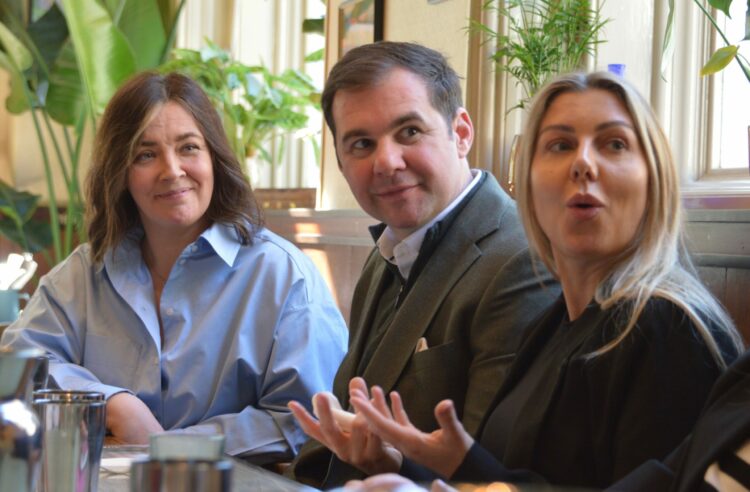
- Hayley and Christopher Commerford, Parliament Square Coffee
- Jennie Lewis, Liverpool Business News (chair)
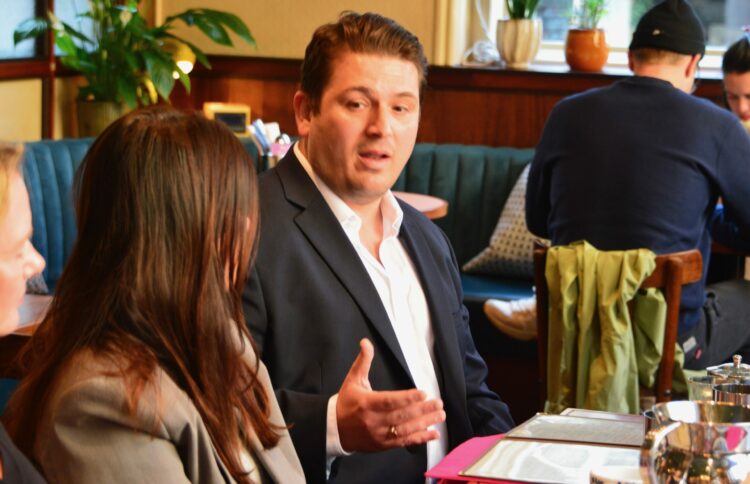
Addressing the group Paul Abrams said that despite the well-publicised struggles of the UK hospitality sector there was still a strong appetite among investors and entrepreneurs to take advantage of the opportunities that definitely do exist.
“2025 the majority of my work was on both sides of the mergers and acquisitions coin. I was acting for both buyers and sellers in Liverpool and Manchester,” he said. “Buyers are keen to hear from operators with plans to expand, to develop, and with new niche ideas.
“There are plenty of opportunities especially as we live in a multicultural society – that’s something worth investing in and it presents a platform and potential for genuine growth.”
Hospitality health check
Bill Addy acknowledged the economic challenges faced by businesses right now but also said the sector in Liverpool was resilient and had come through economic shocks such as the credit crunch and COVID in previous years.
He said the recent Liverpool Restaurant Week, now in its third year, had proved to be a major success with 200 businesses seeing vouchers downloaded from around 20,000 diners.
“The visitor economy for the city region is now worth £6.9bn a year. It supports 58,000 jobs and is back to pre-COVID levels. 25% of all the spend in the city centre comes from people travelling more than 40 miles to get here. We are driving people to this city.
“Hotel occupancy above 90% on some weekends and core occupancy running at around 75%. The concern that we have at the moment is that spend is down.”
Hospitality businesses are facing a number of challenges in Liverpool. One of the more recent concerns has been new night-time parking charges implemented by the city council. Bar and restaurant owners claim these are hampering the night-time economy.
Squeeze on the sector
And it is not only local Government which is putting the squeeze on. The hospitality entrepreneurs around the table believed one of the biggest issues they face is VAT. At 20% it is one of the highest rates in Europe. And it also creates confusion for customers.
Christopher Commerford said: “VAT is probably the biggest issue for us. We don’t get anything back off it. If the Government had a magic wand that is the thing they could look at for us. Consumers don’t understand it.
Kayleigh Baccino added: “The reduction in VAT during COVID made a massive difference. VAT is slapped across all kinds of hot food on people who are sitting in. It is really difficult. A sandwich is a sandwich and if they are sitting in it is a really big proportion of the cost and it can put people off.
“We try to play around with the menu and have a take-out price and an eat-in price. It is difficult to get consumers to understand why you are charging two prices. They think they are being charged to use the plates, but it is the VAT. Even a small reduction would make a massive difference.”
Both businesses also said rises in the National Minimum wage and changes to National Insurance had pushed up costs. And the investment in hiring, training and developing staff can come to nothing when they leave for alternative careers.
“Young people don’t see working in hospitality as a career. They see it as a stepping stone to something else. As a business you are investing in people,” added Kayleigh.
“Brexit was massive because a lot of European workers could no longer come and stay and it made recruitment really difficult. When we recruited locally a lot of people just lacked the skillset.”
Hayley Commerford agreed, saying: “There is not enough championing of careers in the hospitality sector. It is not something that people aspire to. It is a shame because there is so much room to grow in this industry. You can really go places in terms of a great career.
“It needs to start really early. By the time you get someone at 18 it can be too late as they have already made decisions about their lives.”

The right proposition
Rob Deacon said Liverpool ONE had little trouble filling its space for bars and restaurants and its focus was more on the quality of what is on offer.
He explained: “There is a flight to quality. A few years ago you could open a new restaurant in Liverpool and you wouldn’t have to do too much to get people in through the door. Now there has to be a much stronger proposition. Social media is so important.
“We are fully-let so our approach is opportunity-led. Because of the cost of being in Liverpool ONE it is more expensive than elsewhere in the city.
“We have to ask what we are going to do to persuade people to choose our restaurants rather than go to the Trafford Centre or Cheshire Oaks? We have to bring in the brands that people want and when they are here we have to create an experience that makes people want to come back.”
This point about quality was backed up by Anna Viera, whose agency has supported multiple hospitality brands with their marketing strategy. She said it was more important than ever for new brands to have a strong product.
“If you have a good product then you survive but if the product isn’t good enough then that is where you struggle. If you have that passion and determination then I think you will always attract people.
“There is still an appetite for growth. We are seeing London-based brands coming to the north. They are looking at Manchester first because it is a big city but then next on the list is always Liverpool. We have a natural attraction because we are a tourism city.
“The numbers have to be there and the footfall has to be there but we find once they arrive they just fall in love with the city. Permit room said Liverpool was the best launch they had ever had.”
Moving with the market
Metquarter first opened in Liverpool in 2006 and Jennina O’Neill said the mall had pivoted away from its original focus on designer brands. She said: “When we opened we were lucky because we had major international brands.
“Brands moved to follow the footfall. One of our strengths has been that we are good at evolving – we have a small team. I think we have pivoted more towards independents.
“There is a lot of work going on in the background. Because we are quite dynamic we have the flexibility to adapt. We are able to say ‘how do we get this to work?’ and I decided two years ago to ‘just say yes’. That is my motto now.”
Liverpool still has a ‘famine and feast’ issue. Hotels are bulging at the seams at weekends but the city’s relatively low business density meant the corporate market was still too small to make up the midweek shortfall.
There was general agreement the city needed better infrastructure and more grade A office space to attract more people in. Bill Addy also talked about the importance of the £2-a-night hotel room levy run by the Accommodation BID.
“That will deliver around £4.5m this year and it enables us to bring back the subvention fund (a fund to offer support to major conferences and events) and bring more midweek conferences to the city.”
Rob Deacon added: “At the weekends Liverpool is really busy and during the week it isn’t. What is lacking is that corporate market. The more people we can get working in the city the better it is for hospitality.”
Kayleigh also said: “We need to create that weekend feel all through the week. The biggest difference between Liverpool and Manchester. Midweek can kill a business. The cost of labour shoots right up and then you do everything you can at the weekend to make up that.
And Anna also chipped in: “One of the biggest fears among operators in Liverpool is LFC not getting into the Champions League. And that has to change because we can’t be that reliant on it.”
Talking about the commercial property market in terms of hospitality, Joel Lawson said: “We are seeing a real polarisation in terms of demand. There is real strong demand for Liverpool but it has to be the right product in the right place.
“The vacancy rate is really low so there are not a huge number of opportunities. You are seeing that shift from traditional retail into other uses such as hospitality as those retail uses are consolidating.
“High streets are more challenging now. In somewhere like Liverpool ONE the challenge is getting the right occupier but in a high street you are trying to fill vacant units and it becomes less about the right deal. It is about the immediate challenge of filling space.”
Food for thought on funding
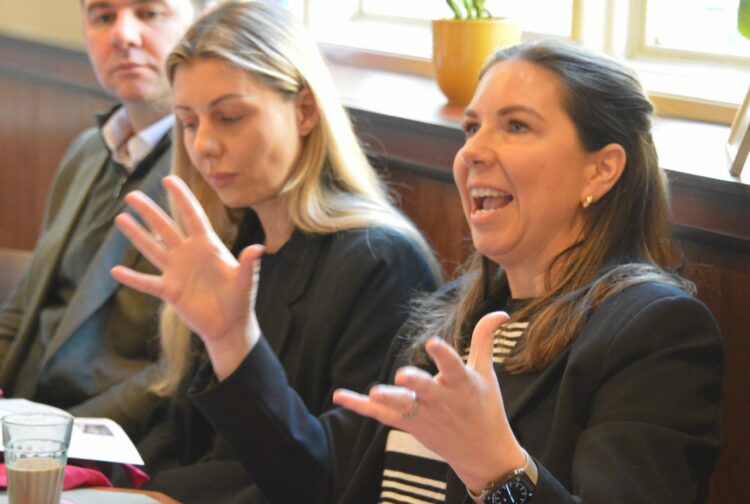
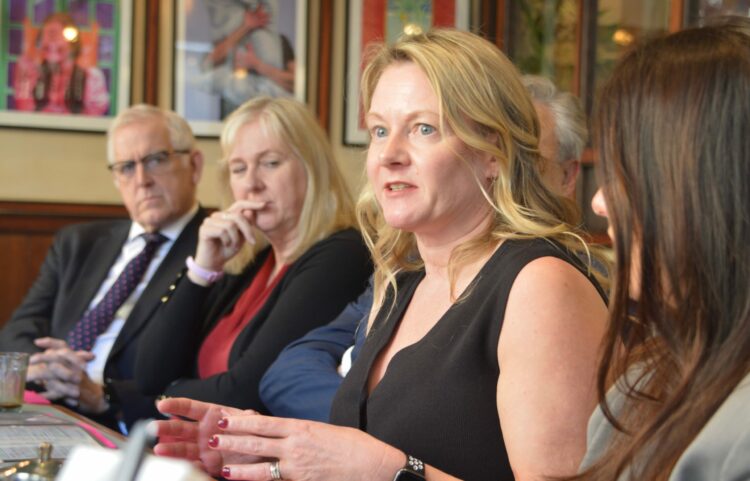
On the investment side Sue Chambers said River Capital had invested in a number of hospitality ventures. Their support was vital, she said, as it was very difficult for such ventures to get money from banks.
“I am more on the loan side than the investment side and support for the investment side for hospitality seems to be few and far between. So those kinds of start-up businesses tend to start off with business loans,” explained Sue.
“Nisha Katona (Mowgli) was saying at an event the other day that she had to initially fund the business herself and didn’t secure outside investment until later on. So it does seem to be lacking for start-ups.
“What we look for is something that is a little bit different with a focus on the individuals. It is a very turbulent sector so we ask ‘do they have the drive, do they have the enthusiasm?’
“We have a range of funding. Some funds are for growth and others for start-ups so a hospitality venture doesn’t necessarily have to be scalable. If you want to stick to a single venue then that is fine.
“In general the attitude towards hospitality needs to change a bit from the banks. There are good businesses there but there is definitely a block there. It is recognising the resilience of some business and eventually changing that mindset.”
Paul Abrams added: “Location is important but it is also about being pro-active and having the foresight to know what your next steps are. From a commercial point of view it is how you identify the risks and the strategy, including exit or succession.
“This city does have the experience and that is something we can build on. There is a growth here of opportunity. It is about coming together and getting people away from the work from home mentality.
“There is a marked difference to Manchester. Our neighbours up the M62 have benefited from accelerated investment. But Liverpool also has the potential to be a growth hub just like Manchester.”
Hard work pays off
Both Hayley and Kayleigh said while there were big external pressures on business, it was also essential for entrepreneurs in the sector to be both hard-working and ready to adapt to change.
Hayley said: “You have to put the hours in. It is hard work. We came in with a level of experience and we were ready to submerge ourselves and work really hard. Doing it at the right time is important and having the courage to make tough decisions.”
Kayleigh added: “You can talk about the external things that help drive people into the city but at some point you have to take responsibility as a business owner and look at what you are doing. You have to be prepared to put the work in.
“Sometimes people will over-complicate their offer and then corners can get cut. What we have tried to do is simplify our concept and do that one thing really well. It means your operations and processes become easier.”
Christopher also said: “You only get one chance. Once people have a bad experience at a restaurant they won’t go back.”
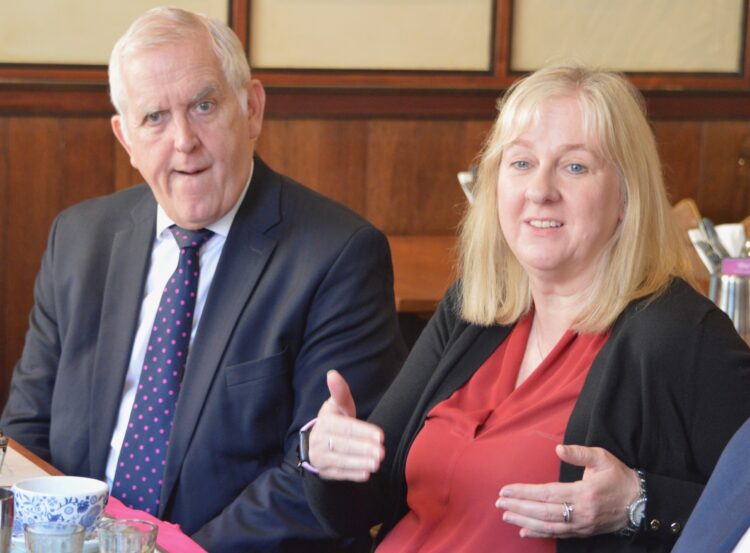
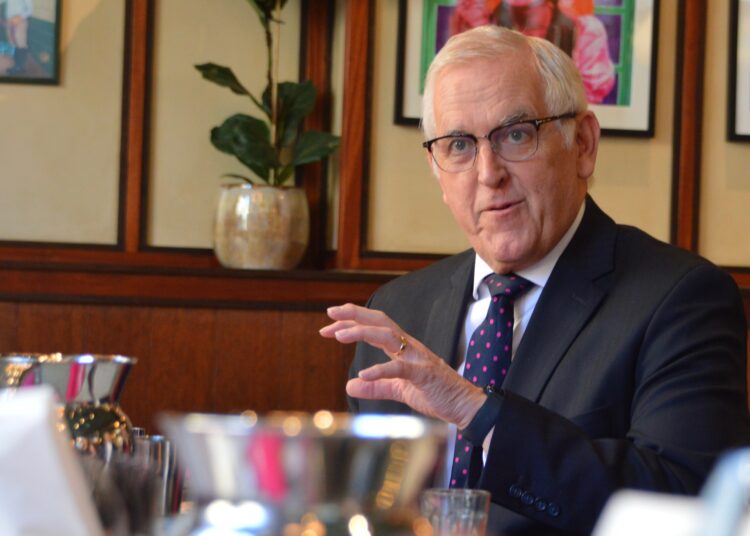

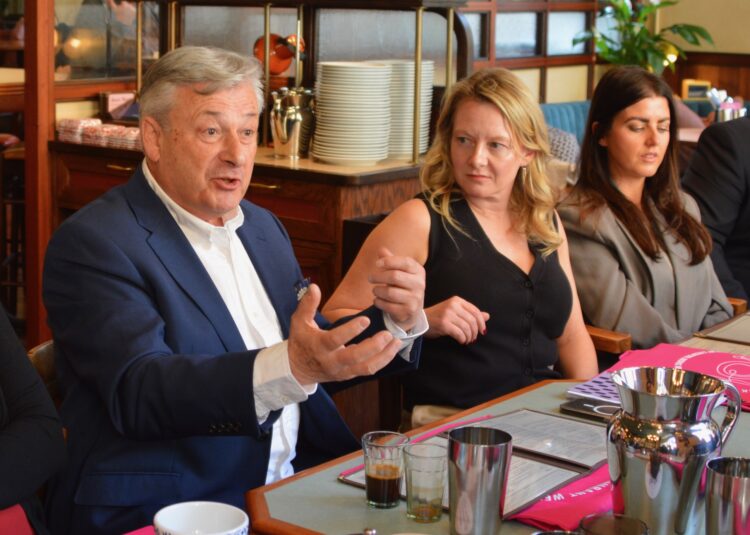
As well as launching his successful law firm back in 1980, Gregory Abrams is also well-known in the city for being among a group of business leaders who worked to revive the then tired and ailing Cavern Quarter back in the 1990s.
He said the city leaders needed to replicate that same energy if they were to bring more businesses into the city.
“Looking at the bigger picture in terms of connectivity to Liverpool, there needs to be infrastructure which supports people coming,” he told the group. “We don’t have a train to the airport and that is a big problem.
READ MORE: Consultation to begin on £1.2bn skyscraper cluster
READ MORE: Serviced apartments plan for Cavern Walks
“When we formed the Cavern Quarter the biggest thing for us was leadership from the city council. The then leader of the council Mike Storey (now Lord Storey) was so supportive and we had meetings and worked with them to create the image of Liverpool.
“How do we get people here? We start with all the building blocks. Every morning people came into town and it was very clean, safer, better lighting. All of these things are key and I do think that the city council needs the kind of leadership that Manchester has had.
“That way we get more investment, get more businesses and that creates the midweek trade and makes the city more vibrant and brings in more money.”