

Prime Minister Andy Burnham and Liverpool City Region Mayor Steve Rotheram are making serious moves to tackle delays and costs in procurement and planning – and that is good news for growth writes Merseyside manufacturer Greg Johnson
There is a simple rule of thumb – the more you regulate or tax an activity the less of that activity you will get.
Thus, two of the major factors in the poor productivity and sluggish growth the UK has seen in recent years has been unnecessary regulation and a planning system that tests the patience of even the most persistent developers.
At the start of this month the new Prime Minister Andy Burnham announced a major change to Britain’s £90bn public procurement sector by amending the rules around social value provisions.
Currently companies looking for work with the Government have to demonstrate social value when carrying out the work. This is focused on areas such as equality and diversity and net zero.
Andy Burnham isn’t proposing to scrap the social value obligation, and nor should he, but instead wants to shift the emphasis onto job creation.
Bidders will be given extra credit for creating local jobs paying above the minimum wage, plugging local skills gaps by providing training and offering 45-day work experience placements for young people.
This is a change that has the potential to make a real difference to peoples’ lives and get more economically inactive people back into the workforce. It will initially only cover central Government contracts but hopefully will be extended to local authority contracts.
Here in Liverpool, city region Mayor Steve Rotheram is also proposing a big change to how major planning decisions are made – and that could directly benefit a large area of Liverpool city centre around the waterfront.
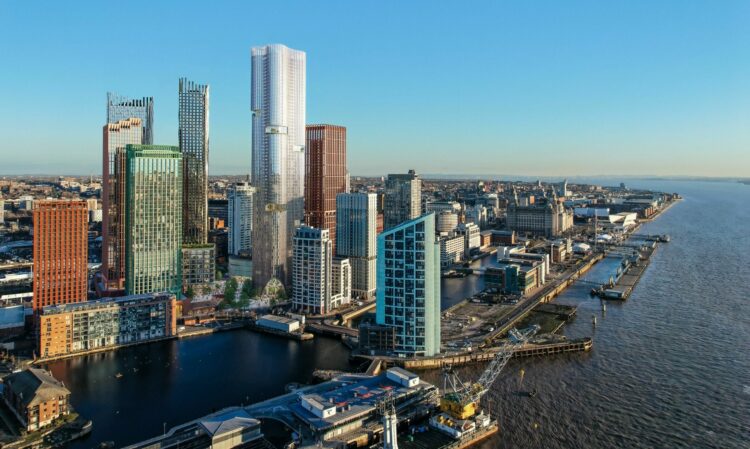
He is looking to establish a new Mayoral Development Corporation (MDC) that will oversee development of 174 hectares of mainly brownfield land, stretching from Everton’s Hill Dickinson Stadium into the Pumpfields area and commercial business district.
Proposals for the area include the construction of more than 17,000 new homes – both market and affordable – as well around 5m sq ft of commercial space. It takes in the giant £1.2bn Kings development, Central Docks and the Pall Mall office scheme.
I’m not a developer myself. But as chief executive of Warwick North West, a key manufacturer and supplier of windows and doors to both private and social housebuilders, I’ve seen the logjams and the frustration caused by unnecessary delays to great projects.

Take a look on the planning portal of any local authority and be amazed at the sheer weight of documentation required for even the most straightforward of developments.
There is a growing emphasis on demonstrating real determination to push through a project. But developers can be in discussions with council planners for two years or more to make sure their scheme is compliant down to every comma, and momentum can be lost.
Often this can come at a huge cost even before construction work begins, and council planning committees, sometimes swayed by small but very vocal NIMBY groups, may well refuse to grant consent. Appeals take more time again and cost more money.
In Manchester, former council leader Sir Richard Leese and the late former chief executive Sir Howard Bernstein took a more pragmatic approach and allowed builders to build, helping to create a dynamic city centre economy.
Steve Rotheram’s proposed MDC, which has recently undergone public consultation, promises a similarly no-nonsense approach and could provide the catalyst Liverpool needs to accelerate development.
It will have sweeping powers over planning decisions, granted under the newly-passed English Devolution and Community Empowerment Act 2026.
It could mean that decisions on major projects within the MDC zone can be expedited much more quickly and potentially at a lower cost, injecting a new sense of urgency into the city centre economy. It could be a gamechanger.
We don’t know how the MDC will utilise those powers yet. Of course, we don’t want to ride roughshod over genuine local concerns or dispense with due process altogether.
But for too long Liverpool and much of the north of England has lagged badly behind London and the South East when it comes to economic growth and jobs creation.
Another change by Andy Burnham, announced in late July, also means a growth strategy for the region is badly needed. From 2028 funding for devolved regions, including Liverpool city region, will come from local income tax and business rates instead of direct Whitehall grants.
So, the faster we grow our economy and the more jobs we create means more money for the city region to spend on major infrastructure projects. When it is up and running the new MDC has to be bold and sanction a new era of ‘build, build, build’ on Liverpool waterfront.
Comments are closed.