
£6bn barrage could have ‘catastrophic’ impact
Special report: As the Combined Authority gets ready to choose a location for its £6bn Mersey Tidal Power barrage Liverpool city region maritime leaders warn of a ‘catastrophic’ impact on the £5bn local maritime industry and its 48,000 jobs. Tony McDonough reports
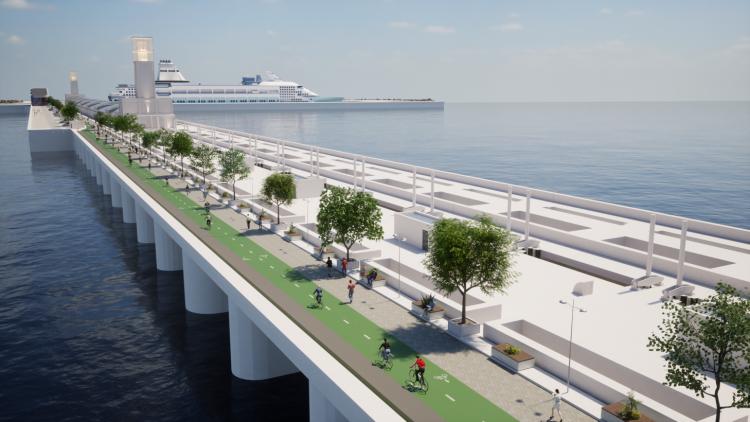
Liverpool City Region Combined Authority (CA) is set to choose between two locations for its proposed £6bn Mersey tidal power barrage.
At a meeting on November 6 the CA will meet to decide the next stage of the project but the new chief executive of Port of Liverpool operator Peel Ports Group is warning of a “catastrophic” impact on jobs and investment if the wrong choice.
And this view is being backed by multiple other big Merseyside maritime businesses including industry representative Mersey Maritime, owner of the Cammell Laird shipyard, ferry operator Stena Line, oil giant Essar and its subsidiary Stanlow Terminals and ABP, operator of the Port of Garston.
While Peel Ports does back the project in principle it, along with other maritime firms, is concerned how it would affect the 15,000 shipping movements that take place in the Mersey Estuary each year.
Vessels including cargo ships, oil tankers, container ships, cruise ships and Irish Sea ferries make a major contribution to the £5bn generated by the maritime sector in the city region each year, supporting around 48,000 jobs.
The CA has not revealed the exact location of the two possible choices for the barrage but LBN understands one may be close to Everton FC’s Hill Dickinson Stadium on the Liverpool side of the river and stretching across to Wallasey.
Another choice would likely be a location further up the river, perhaps beyond the Tranmere Oil Terminal where supertankers come and go on a daily basis. This would impact far less on shipping movements.
Generating up to a gigawatt of clean, predictable, electricity, the barrage would include a lock system to allow ships in and out and this is what the local maritime industry is most concerned about. It would also allow people to cycle and walk along it.
In a document seen by LBN industry experts have said that any configuration requiring lock transit remains incompatible with the operational needs of a modern commercial port.


In summer 2025 LBN revealed a number of local maritime companies, including Peel Ports, had written to city region Mayor Steve Rotheram warning him: “This could lead to us losing future investment and jobs.”
Signatories to the letter sent to Mr Rotheram include Port of Liverpool owner Peel Ports, Birkenhead shipyard Cammell Laird, Peel Ports Logistics, Stena Line, Isle of Man Steam Packet, UM Terminals, Exolum, NW Trading (Logistics) and Finsa UK.
In a new strongly-worded statement the newly-appointed chief executive of Peel Ports, David Huck, said: “We support clean energy initiatives that drive economic growth, and recognise the potential role hydropower can play in the UK’s energy future.
“However, that ambition cannot come at the expense of the businesses, jobs and investment that already depend on the Mersey.
“The Mersey is the economic lifeblood of Liverpool city region and the maritime sector supports more than 48,000 jobs and contributes £5bn in annual business turnover. A tidal power scheme in the wrong location could threaten one of the UK’s most important trade gateways, with significant consequences for the wider economy.
“Previous studies into tidal power and estuary infrastructure projects have consistently demonstrated the need for thorough assessment of their economic, navigational and environmental impacts before decisions are taken. The same rigorous approach must be applied here.
“We urge the authority to reach its decision very carefully and to allow for changes if it emerges the project could have a catastrophic effect on the maritime economy that has sustained Liverpool city region for centuries.”
Ruth Wood, chief executive of Mersey Maritime, added: “We recognise the importance of renewable energy schemes to drive our net zero agenda.
“Mersey Maritime has engaged with the Mersey Tidal Power project through the Maritime and Marine Users Stakeholder Group, where maritime businesses and river users have raised a number of serious operational, navigational and economic considerations on behalf of the wider maritime sector.
“As the preferred location is announced, we expect these views to have been taken into account alongside wider project objectives.
Ruth added jobs and investment in the sector locally could be at risk if an unsuitable location is selected.
“Unfettered, reliable and predictable access to the River Mersey remains fundamental to existing port operations, future business growth and the wider competitiveness of Liverpool city region. This must remain a central consideration as the project progresses,” she explained.
If the barrage were to be located close to Bramley-Moore, shipping in and out of the main port of Liverpool, and the Liverpool2 container terminal, would be down-river of the structure.
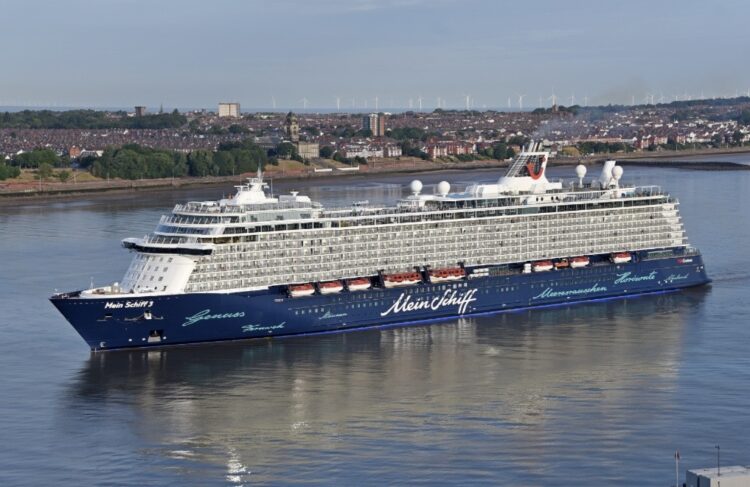
However, there remains a huge volume of vessel movements beyond this point. More than 100 cruise ships, along with other vessels, utilise Liverpool cruise terminal close to the Pier Head each year.
Next to the cruise terminal is the recently completed Isle of Man ferry terminal which, during the peak summer months, can handle multiple berthings a day. Across the river there is Birkenhead’s dock system which sees numerous commercial vessels coming in and out.
On the Wirral river bank, close to Woodside, is the 12 Quays terminal. This is a major Irish Sea hub for Swedish ferry operator Stena Line which can see several vessels sailing between the Mersey and Belfast and Dublin in a single day.
Stena has said it “continues to have concerns about any scheme that could reduce operational flexibility, introduce navigational constraints, increase passage times, or create additional points of failure for vessels accessing 12 Quays”.
It added: “The reliability of our freight and passenger services depends on safe, unrestricted and predictable access to the Mersey, and even relatively small impacts can have significant consequences for schedules, our customers and their supply chains.
“We’re also conscious of the longer-term implications. Any infrastructure that limits future capacity, vessel access, operational resilience or growth within the estuary risks undermining the competitiveness of Liverpool as a key trade gateway.”


Further up the river on the Wirral side is Cammell Laird shipyard which has ships coming in and out frequently. Next to Cammell Laird is Tranmere Oil Terminal, operated by Stanlow Terminals and part of Essar, which handles around 150 supertankers a year unloading crude oil and ammonia.
Linton Roberts, chief technology officer Balaena Maritime, owner of Cammell Laird, said: “We at Balaena recognise and support the importance of renewable energy schemes within our business, Liverpool city region and the wider UK energy sector.
“The Mersey Tidal Power Project could have a significant impact on our operations at our Birkenhead shipyard which supports our defence and commercial customers.
“The final location must consider all River users along with the wider impact the Project could have on the maritime sector. We remain committed to support detailed discussions to assist in the right decision for the final location”.
Mike Gaynon, chief Executive of Stanlow Terminals, said: “We support the ambition to harness the power of the Mersey to contribute to the UK’s clean energy future. That ambition will be best delivered by building on the strategically important energy infrastructure that already defines the river.
“Our site at Stanlow is strategically important, manufacturing the vital fuels that the UK economy needs. The site relies on safe and reliable marine access so it is essential that any development prioritises this access.
“We share the ambition that the energy transition will strengthen the UK’s energy security and resilience and enhance vital existing energy infrastructure.”
Next to Port Sunlight River Park is Bromborough Dock which handles cargo vessels on a daily basis and across the river at Garston Docks, ABP operates a busy commercial shipping terminal.
ABP said: “The Port of Garston is an important component of Liverpool city region’s maritime economy which brings so much value to this city, supporting trade, jobs and investment. ABP has invested substantially in Garston over recent years to strengthen the port’s capabilities.
“Any proposal for a barrage on the River Mersey must carefully consider the potential impact on marine navigation. If a scheme were to compromise access for vessels operating upriver, the economic contribution made by the Port of Garston and the businesses that depend upon it would be significantly affected.
“The case for future investment in the port would also be called into question if long-term operational access and competitiveness could no longer be assured.”
At Eastham in Wirral are the lock gates to the Manchester Ship Canal and the Queen Elizabeth II dock which has recently seen the opening of a £10m terminal handling auto components coming from Spain for the Stellantis factory in Ellesmere Port.
READ MORE: Cunard announces Liverpool to New York crossing
On the ship canal itself there are several berths servicing the giant Stanlow oil refinery, the second-biggest in the country. That sees around 500 vessels a year coming in to pick up refined petroleum products.
Britain’s best known-bird charity, the Royal Society for the Protection of Birds, has also written an article in which it says the barrage “would probably represent one of the most environmentally damaging developments in the estuary”.
Comments are closed.