
Key hydrogen player reports falling revenues
Progressive Energy, the key player in the multi-billion pound hydrogen production and carbon capture project close to the Mersey Estuary, reports pre-tax losses and a sharp fall in revenues. Tony McDonough reports
Progressive Energy, which is leading the multi-billion pound HyNet hydrogen and carbon capture project, is reporting a sharp fall in annual revenues.
Accounts just posted on Companies House show Progressive’s revenues for the 12 months to September 30, 2024, were £6.2m, down from £12.2m the previous year. And its £143,742 pre-tax loss compares to a £1.5m profit in 2023.
However, the company is likely to see more lucrative times ahead after the Government gave the green light to the HyNet hydrogen project, committing around £22bn over 25 years to be shared with a similar project in the North East.
HyNet has multiple partners but Progressive, which specialises in low carbon energy projects, has taken the lead and aims to oversee the supply of hydrogen to multiple industrial customers across the North West by late 2027.
While the project has the potential to be a game-changer in the UK’s push towards net zero, it is also hugely controversial with critics claiming it is just a way of prolonging the use of fossil fuels.
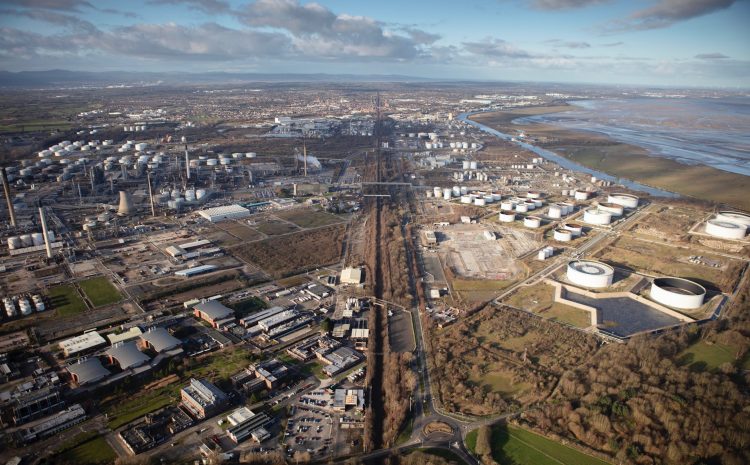
It will produce what is known as ‘blue hydrogen’. This is hydrogen produced by burning methane, or natural gas, at a plant currently under construction at the Stanlow oil refinery at Ellesmere Port. Stanlow owner Essar is also a partner in HyNet.
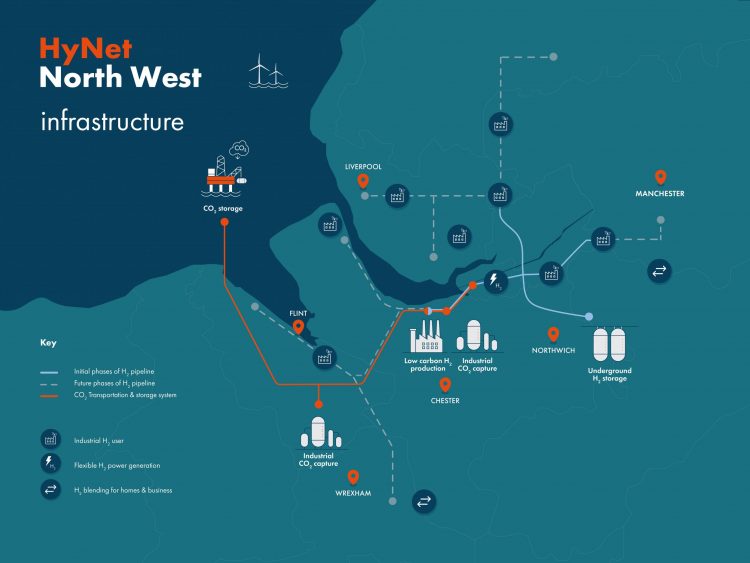
Burning gas, of course, produces significant amounts of CO2, a major cause of global warming and climate change. So HyNet is also building a plant to capture the emissions and then pipe them to depleted gas fields under Liverpool Bay where they will be stored indefinitely in the rock.
Phase one of the project – HPP1 – will see the construction of a hydrogen plant that will have a production capacity of 350MW and will capture around 600,000 tonnes of CO2 a year. HPP2 will follow later and will add a further 700MW of production capacity.
It is claimed 1,000 MW is enough energy to power a city the size of Liverpool, capturing up to 1.8m tonnes of CO2 per year (the equivalent of taking around 700,000 cars off the road).
READ MORE: HyNet hydrogen & CCS… everything you need to know
Critics claim carbon capture and storage is unlikely to work at this scale and will not achieve the 95% capture rate required to meet stringent Government rules.
In April EET Hydrogen, a HyNet partner and a division of Essar, said it has secured hydrogen supply agreements with more than 30 North West businesses in the industrial, power, and transport sectors.
In the latest accounts, filed at the end of June, Progressive Energy said its financial performance was “in line with directors expectations”.
In the annual report director David Hanstock writes: “The company aims to make and create value by making a material contribution to the reduction of greenhouse gases and has a particular focus on carbon capture utilisation and storage and hydrogen.
“This year saw continued significant advances in both the CCUS and hydrogen project portfolios resulting in a substantial reduction in the development risk for key projects in these areas.”
David added HyNet was set to “make a major contribution to the decarbonisation of industry across the region… the development of HyNet is advancing in parallel with the development of the necessary legislation by Government.”
While he insisted the funding commitment from Whitehall for HyNet had been positive for the company’s future prospects, he added there remained a future risk if political sentiment were to shift away from carbon capture and storage.
“CCUS deployment has strong support from the Committee for Climate Change whose assessment is that it is an essential requirement to enable the UK to meet the legally binding targets set in place by the 2008 Climate Change Act,” he said.
“However, the risk of delay and budget limitations remain”