
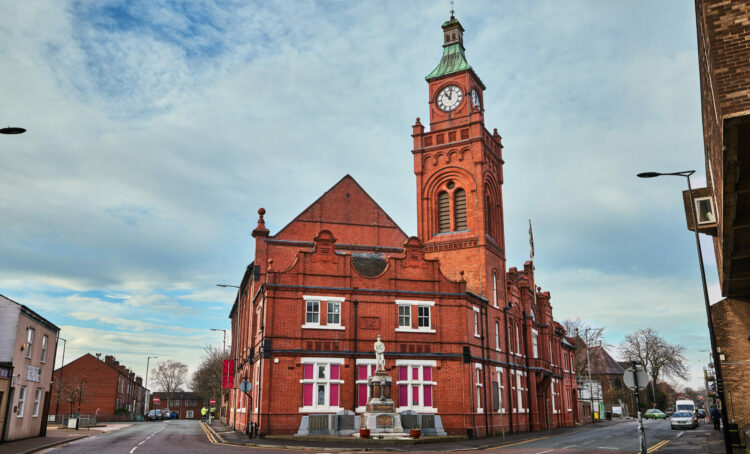
A £30m project to transform a Liverpool city region town centre is seeing major progress on the restoration of a Grade II-listed Victorian town hall using traditional craftsmanship and new technology. Tony McDonough reports
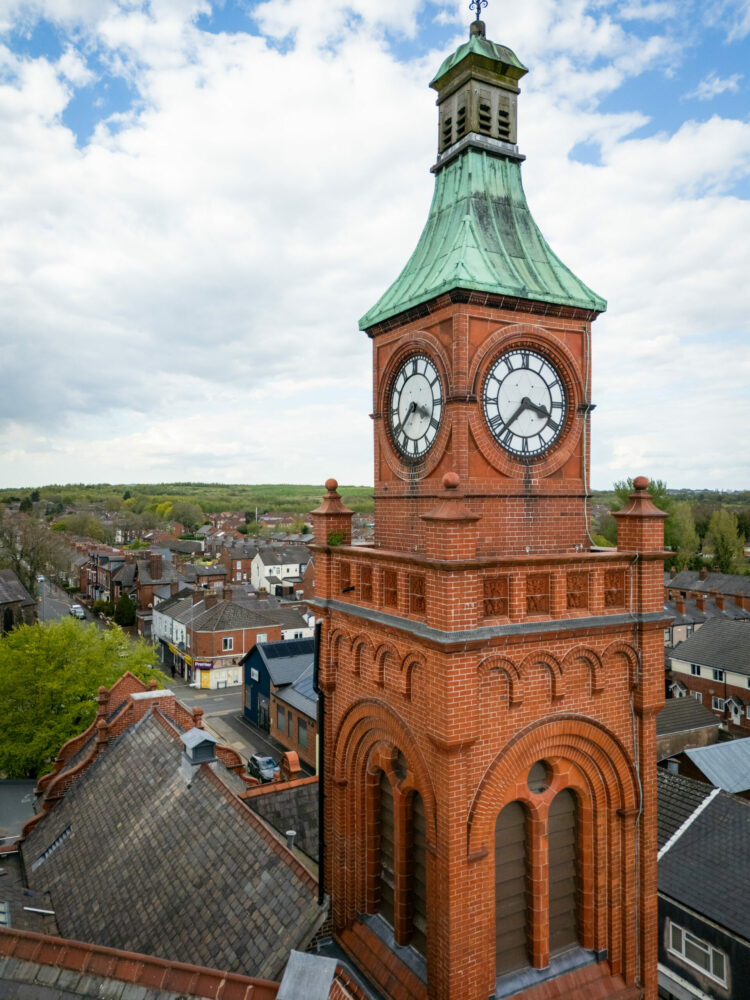
A project to restore a Grade II-listed Victorian town hall is on track for delivery thanks to a “blend of heritage craftsmanship and cutting-edge technology”.
In late 2024 St Helens Council approved the full restoration of Earlestown Town Hall, a building originally completed in 1893 at a cost of £10,200 (almost £1.2m in today’s money).
This forms part of a wider £30m regeneration scheme that is seeing the transformation of Earlestown Market Square and improvements to the surrounding public realm. Work on the wider scheme began in February.
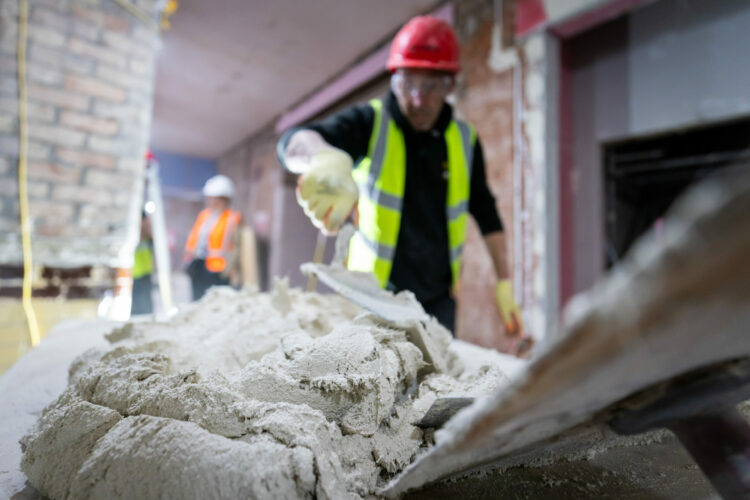
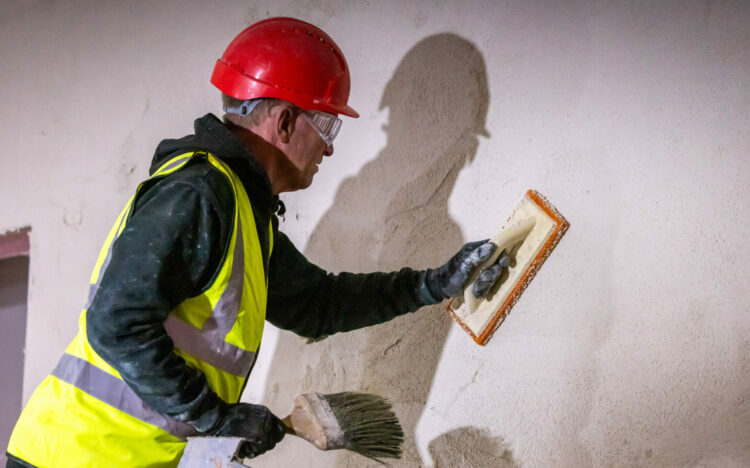
Main contractor HH Smith & Sons says one of the most deceptively challenging elements of the town hall restoration is the plastering the ceilings and walls.
This process must replicate exactly the materials and techniques used when the building was first constructed. Surfaces must be carefully prepared before any plaster is applied, both to protect them and to prevent cracking.
HH Smith’s project team is working with lime plaster, a material rarely used in modern construction. It must precisely match the chemical profile of the building’s existing plaster before reproducing it at scale.
Any inconsistency in composition could cause old and new plaster to expand and contract at different rates, risking structural damage, so accuracy at every stage is critical.
While lime plaster may seem a relic of the past, it is quietly addressing a very modern challenge. Through a natural chemical process known as carbonation, it absorbs CO2 from the atmosphere, effectively locking it into the fabric of the building.
Mike Smith, project manager at HH Smith, said: “Every day on this site is a lesson in precision. Whether we are chemically matching Victorian plaster or using 3D scans to map the building’s exact structure, we are working to ensure this hall stands proud for another century.
“It’s particularly rewarding to see our apprentices getting the opportunity to learn so many skills. They are a bridge between the builders of 1892 and modern tradespeople today.”
This forms part of a long-term regeneration programme being delivered by St Helens Council and ECF – a partnership between Homes England, L&G and Muse.
It is backed by £20m from the Government’s Levelling Up Fund and £8m in match funding from the council. A further £1.1 million from the Public Sector Decarbonisation Scheme will replace the building’s heating and lighting.
Once restored the town hall will house a mixed-use performance and events space, flexible co-working and community facilities, plus a new courtyard garden with café.
On the exterior, the restoration has been no less exacting. Perfect replicas of the original wooden penthouse louvres – the roof turrets used for ventilation – were crafted entirely by hand, then carefully lifted into position by crane.
High above, the bells of Earlestown’s five-stage clock tower have also been receiving specialist attention. The clock and bells were originally produced by Messrs Potts & Sons, and their distinctive chimes have long been part of the rhythm of local life.
READ MORE: Liverpool budget hotel on the market for £4.5m
Specialist horologists from The Cumbria Clock Company – the same team behind the celebrated restoration of Big Ben’s bells and clockwork – are reinstalling the fully overhauled mechanism, complete with a series of upgrades.
Built in an eclectic Queen Anne style with Flemish influences, the two-storey red brick building features slate roofs, an attic and a basement.
It is thought the cost of the hall may have been gifted to the community by William John Legh – the local lord of the manor – to mark his elevation to the peerage as Lord Newton in 1892, though the designs had already been commissioned the previous year.