
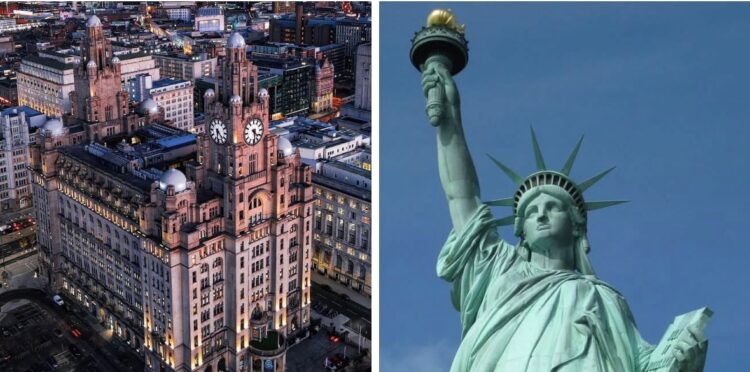
Liverpool city region businesses are looking at the US as a place to expand, while the city region is also keen to attract transatlantic inward investment – a round table organised by LBN and law firm GAD looked closely at the key issues. Tony McDonough reports
As an historic port city Liverpool has strong connections with the US and business and political leaders in the city region are keen to leverage that relationship to grow both inward and outward investment.
Liverpool has seen American inward investments in sport (Liverpool and Everton FC), life sciences (Pierian Biosciences) and artificial intelligence (Kyndryl) while Merseyside firms are also successfully expanding their own operations across the Atlantic.
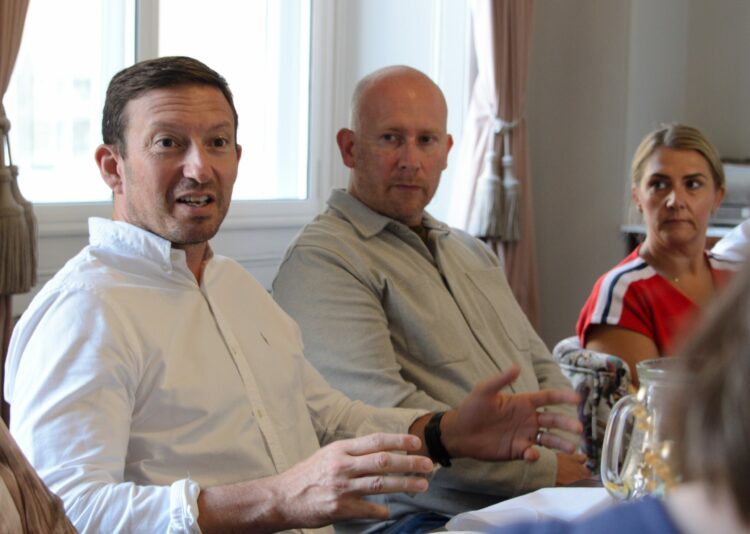
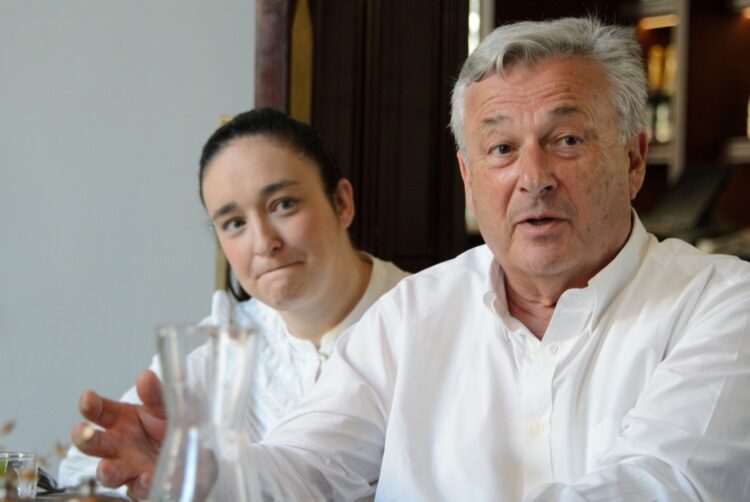
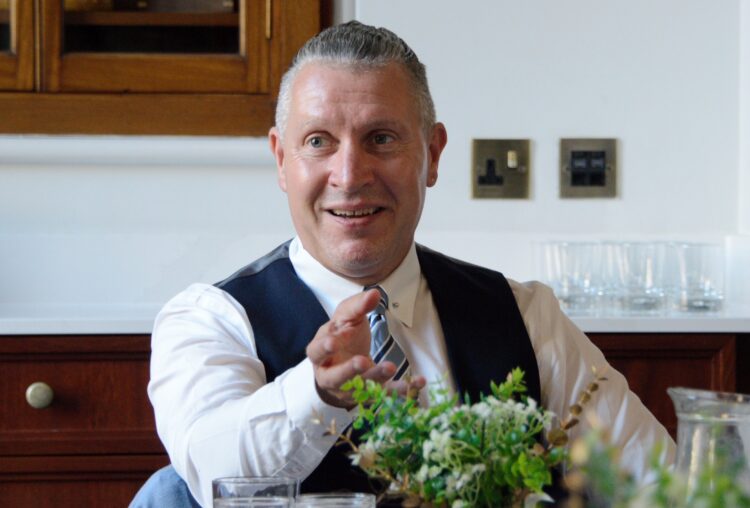
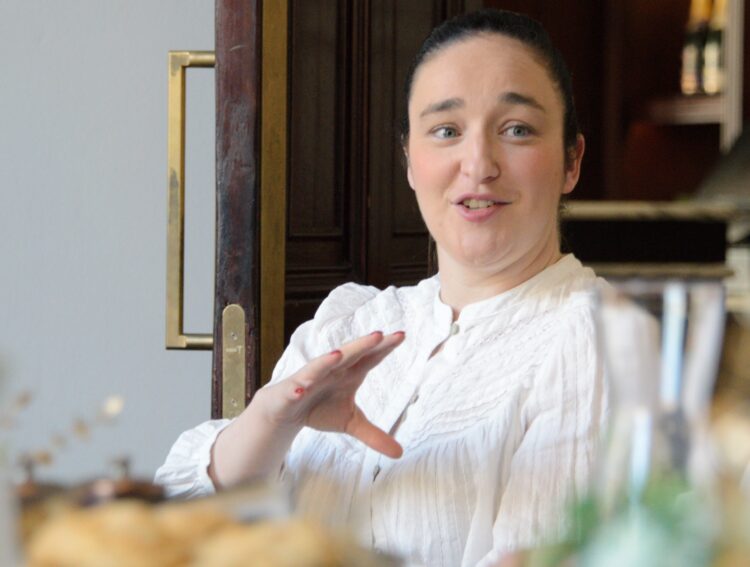
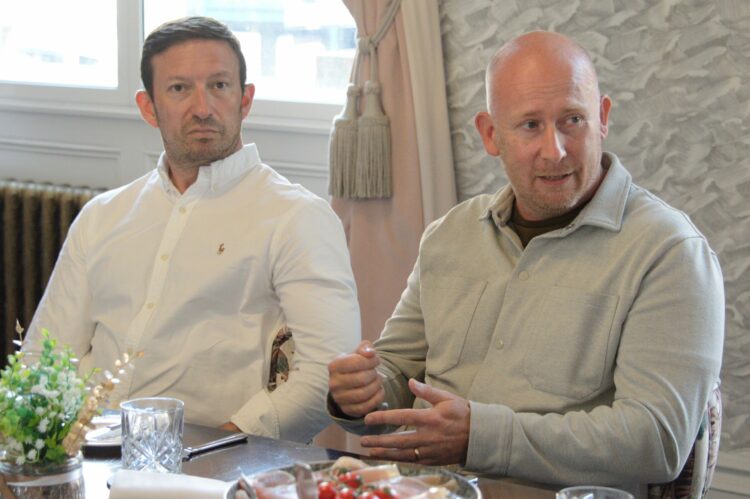
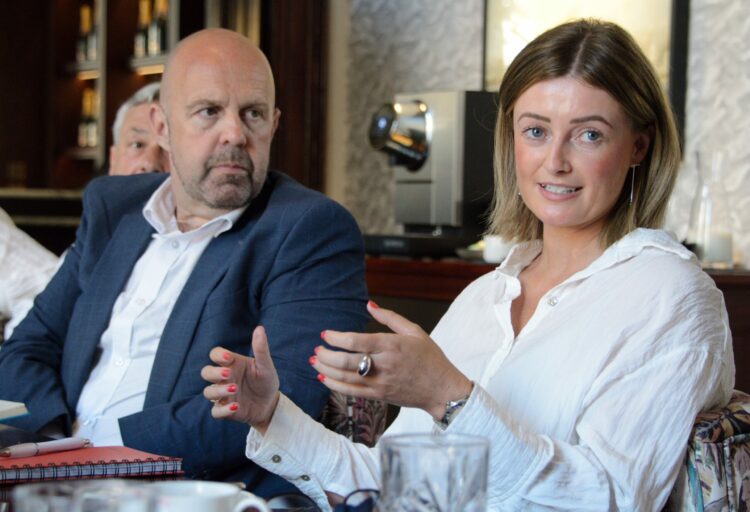
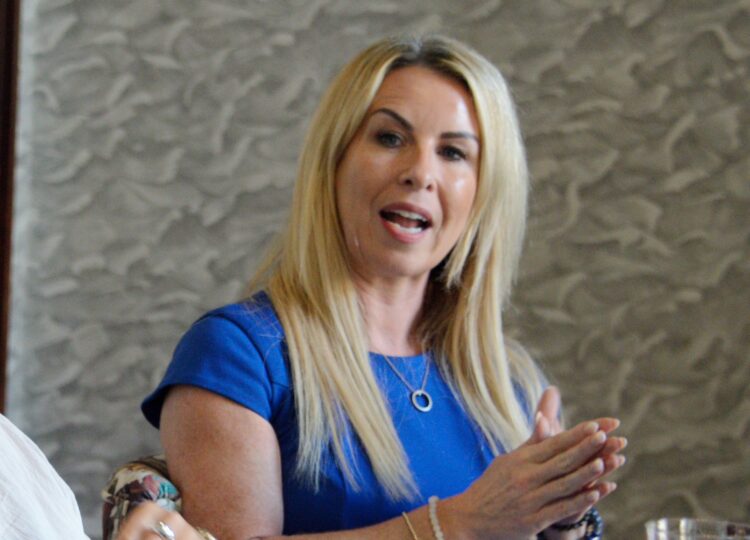
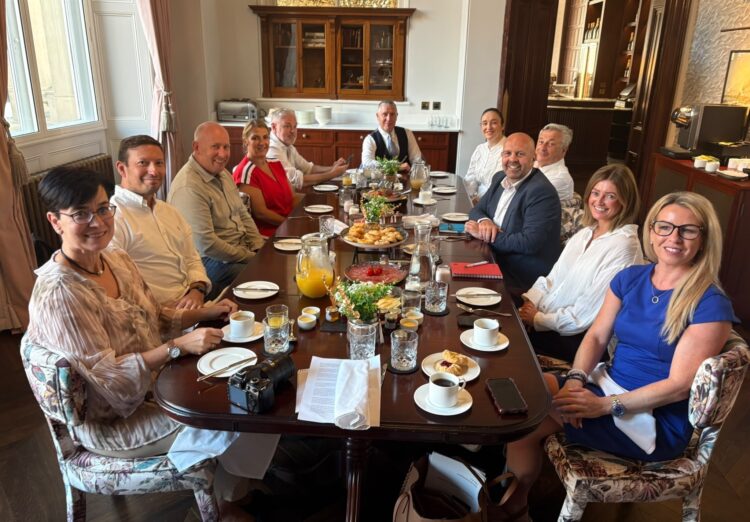
But where there are opportunities there are also challenges and these were discussed and dissected at length at a compelling round table event in Liverpool organised by LBN and law firm Gregory Abrams Davidson (GAD), a local practice with a national and international profile. The event attracted a high calibre of attendees, including:
- Gregory Abrams, founder and managing partner of GAD
- Jonathan Abrams, GAD lawyer qualified to practice in the UK and US
- Nick Small, Liverpool City Council Cabinet Member for Growth and Economy
- Paul Winfield and Anna Shires, Liverpool John Lennon Airport
- Vicky Hincks, Liverpool City Region Combined Authority
- Paul Kallee-Grover, export and international growth advisor (Ki Partnerships)
- Elena Enisco, head of international trade Liverpool Chamber of Commerce
- Andrew Dwerryhouse, managing director of Wild Thang
- Amanda Unsworth, owner of Trinity Logistics
- Christine Vaudrey, V-Connect Global
Gregory Abrams founded GAD in 1980 and today still runs the firm, which has offices in Liverpool and London. Along with others Gregory was instrumental in revitalising the Mathew Street area of the city, where GAD’s headquarters is, in the 1990s.
Their work created a model adopted by the city council for the rest of the city centre and this eventually contributed to Liverpool being European Capital of Culture in 2008. He is proud of his work in the past, but says his focus is now firmly on the future.
“We can’t look backwards, now we have to look forwards,” he said addressing the start of the round table. “This group is particularly interesting because Liverpool has to sell itself around the world.”
Breaking America
Gregory and his family have strong connections with the US, his wife is American. Their son Jonathan, born and raised in Liverpool, has dual UK/US citizenship and this formed the backdrop to his first career choice as a musician.
He and his band left Liverpool and travelled across the Atlantic hoping, like so many before and since, to “break America”. America, sadly, remained unbroken at that time so Jonathan pivoted to the family business and trained as a lawyer, but not in Liverpool, in New York.
Today he is both a qualified UK solicitor and a US attorney at law and he has leveraged this expertise to offer GAD a valuable niche. Working out of the firm’s London office he advises companies who wish to expand into the US and many of his clients are based here in Liverpool city region.
Speaking at the round table Jonathan confirmed there was an appetite for Merseyside firms to expand into the US. This can be helped, he added, by Liverpool’s historic high profile across the Atlantic.
“What is amazing is that wherever you go in the world people know Liverpool. And it kind of sells itself. Generally it has had the best possible advert. People in America have always known Liverpool mainly through The Beatles,” he explained.
“However, more and more it is football as well. The sport is really taking off in the US. I know there is much more to Liverpool than The Beatles and football but they offer an advantage in terms of elevating the city’s profile probably ahead of everywhere else in the UK apart from London.
“It is already an international destination and when you layer in all the other attributes the city has it is an international landmark destination. So it already has a USP.”
Trumping the tarriffs
Jonathan acknowledged that Trump’s attempt to impose tariffs on the UK and the rest of the world had caused short-term difficulties but added that those serious about investing in America usually took a longer term view.
He said: “Anyone looking at the US is looking over a five to 10-year period, maybe even longer. Recently I went to Washington with a British delegation for an event called SelectUSA. America is desperate for foreign investment.
“And it isn’t just competing against other countries, the individual states are competing with each other. There is still a big appetite for Merseyside and UK businesses for expanding into the US.”
Elena Enciso agreed there was a strong appetite among Liverpool city region SMEs to export or expand overseas. She says the European Union is the obvious most popular choice but this is followed by the US.
Liverpool Chamber has long been a valuable resource for local businesses looking to trade expertise and it offers a deep well of expertise and experience.
“There is a shared language and a shared history with the US, but there are also 50 states and people need support navigating both geographic and economic barriers. Companies this small don’t always have the time or resources to do the research they need to do.
“Advanced manufacturers, for example, need to meet specific standards. But once they get in they can expand. It is important to understand the local culture so there are lots of things we will do for businesses to help them get a smoother entry into the market.
“Last year we supported a Combined Authority scheme to deliver exports for the city region and we gave 30 grants to 30 companies. Out of the 30, I would say 22 went for the US.”
Manufacturer who made the move
From its factory and headquarters in Bootle, Wild Thang produces and supplies a dazzling array of branded merchandise for multiple blue-chip clients.
In the past couple of years founder Andrew Dwerryhouse and his team have expanded the business overseas. There are Wild Thang operations on both sides of the Irish border and the firm has also set up shop in New Jersey in the US.
Andrew explained it took six months to a year of preparation to secure the right contacts in areas such as insurance, law and accountancy and they engaged Liverpool Chamber to assist with that.
“If you are going to start it is about getting into a good network of people,” he said. Last couple of years the biggest barrier has been the tariffs.
“We produced branded products and that made it more tricky because some of it is made in Europe and some in the Far East and even the UK. So we have spent a lot of that time understanding the support chains in the US.
“We were funded to go to a trade show for our industry and they were really welcoming and excited to meet us as they see it as a connection back to Europe which is their biggest market the other way around.
“Getting the right information and picking the best US state are two of the biggest challenges we faced. And we went to New Jersey. Some of our trading partners, for example in the gaming industry, are based there.”
People and partnerships
There was a general consensus around the table that networking and partnerships are critical to any successful overseas venture. Having assisted a number of clients to expand beyond the UK, Paul Kallee-Grover understands this well.
He pointed out that local law and accountancy firms often have partners overseas that they can call on. He also urged people to join trade missions. In the past couple of years Liverpool city region Mayor Steve Rotheram has led a mission to Boston and New York.
Paul said: “Going on a trade mission with local leaders can help you open those doors overseas. If you go to London and get off the train no one is going to hand you work.
“So why on earth would you get on a plane and go to Boston and expect someone to give you a contract? It just isn’t going to happen. Go on a mission with the city region or The Chamber. They will make that connection, they will push that door open. Mayors attract mayors, leaders attract leaders.
“It is also about understanding what your product is and what is best for you in that market. If it is pharmaceuticals, if it is tech, if it is manufacturing there are different markets in different places. It is important to find the right people to help you with that.”
Power of the Port
Liverpool is a port city and the UK’s main westward-facing port. Consequently the US is the Port of Liverpool’s single largest trading partner for both exports and imports.
Amanda Unsworth, a former Liverpool docker, has more than three decades of experience in the industry. She founded Trinity Logistics in 2017 and is an expert at moving goods around the world.
She agreed with Paul about the importance of trade missions and has travelled extensively as part of delegations, most recently to China and the Far East. She will ship in and out of the US but adds that since 9/11, 25 years ago, the sheer volume of paperwork and regulation is a significant barrier.
“It can be notoriously difficult for importers and exporters to have the right documentation,” she said. “So it isn’t one of our biggest markets because when it goes wrong it really goes wrong and that can be really costly.
“People need as much expert help as they can get to navigate the landscape and I think there also needs to be a review of their processes. Sometimes it is just a paperwork exercise and so often it is not needed. That is a major barrier for companies who want to export goods to the US.”
Inward investment
While the initial focus on the round table was local companies trading overseas, the equally important flip side of this discussion is foreign direct investment (FDI) coming into the city region.
Mayor Steve Rotheram set a target of increasing FDI by 25% during his last election campaign. Nick Small and his colleagues at Liverpool City Council are working to support him on that.
Cllr Small believes Andy Burnham now becoming Prime Minister will turbo-charge the devolution agenda and the city region’s capacity to attract FDI. He sees the key sectors as health and life sciences, creative and digital, data analytics and cyber security, boosted by the Innovation Zone and the Freeport.
And he also pointed out the big opportunity for professional services firms to win work from overseas companies investing here. He explained: “Sometimes when we talk about FDI we think of it in terms of new factories but it is actually what it means to existing businesses here and what is the impact.
“We have some 15,000 people working in business and professional services in Liverpool. There is a massive opportunity there.”
Collaboration is key
Another big message from the round table was that collaboration is key and Cllr Small issued a ‘come and talk to us’ call to local businesses.
“The private sector has to articulate what is the ask from the city and the city region. The public sector needs to step up but you need to articulate what you need from us,” he told those around the table.
Vicky Hincks and her colleagues at the Combined Authority have been focused on attracting inward investment into the city region life sciences sector for several years. She pointed out that with assets including the Liverpool School of Tropical Medicine, the city already has an impressive global profile.
She said they work with counterparts in Greater Manchester and the Oxford-Cambridge ‘supercluster’ to sell the UK sector around the work and insists Liverpool city region more than holds its own in that company.
“It is about complementing what other areas of the UK are doing and what we are getting better at is carving out our niches. In Liverpool we have infectious diseases with the port connection. We have the School of Tropical Medicine offering genuine world class expertise.
“And in Speke there is vaccine development and manufacturing – so we have some brilliant examples of the work that is already going on. When there are drug trials and a call to arms with things such as the COVID vaccine or global trials people here are always willing to take part in that.
“We have the Innovation Zone from Government which we hope will unlock £800m of investment. It is a whole big picture.”
A Global gateway
A huge issue when it comes to international trade is travel connections. Representing Liverpool John Lennon Airport (LJLA), Paul Winfield and Anna Shires pointed out that if people from overseas can’t get to Liverpool easily, and have trouble getting to the city centre from the airport, that can present a problem.
Paul, LJLA’s aviation director, said: “We have had a really strong couple of years. We have 77 routes now and I think some people in the city region do not appreciate the extent of the destinations served from Liverpool but we have a really good breadth of destinations.
“There are 20 aircraft based at Liverpool and they are what really drive revenue at the airport. We think we can continue to grow passengers in the next few years, and that would put the airport in a strong position. We should be thinking about over 85 International routes.
“And we do have two flights a day with Aer Lingus to Dublin, which connects us to North American routes. There is still not full awareness of that.
“So you can fly Liverpool to Dublin, do US pre-customs clearance there, and that connects onto New York, Boston Washington, Chicago and Philadelphia and other destinations It is a real selling point for the airport.”
However, despite efforts in recent years with both KLM and Lufthansa, LJLA has not been able to maintain global hub access. Paul added: “Liverpool is one of the biggest cities in Europe without global hub access.
“You can get to America here but if you put Beijing to Liverpool into Skyscanner you get nothing. Much smaller airports in the UK have this ability.
“It requires a combined approach from the city region. The transatlantic options we have are a good testbed to wider global connectivity.
And on local transport connections he also said: “Connectivity is difficult. We are the only top 15 airport without a non-stop train or bus into the city centre. As an example Exeter Airport has approximately 500,000 passengers a year and has dedicated links into the city centre.
“As a tourist you arrive in Liverpool and get on the 86 bus and then have to travel around Speke and Garston with multiple stops, it’s a poor welcome to the city”
Anna, aviation development manager at LJLA, emphasised Paul’s point about the airport having a multi-faceted role for the city region economy.
She said: “We do have a lot of leisure traffic, but it is about understanding what other drivers there are including business.
“There are core markets such as tourism, which are high volume, but we see people visiting family and friends, particularly on the central and eastern European routes, as an important driver as well.”
Decades of development
Christine Vaudrey, now an independent consultant, has been involved in economic development and selling the city to the world for more than two decades. Key to Liverpool’s recent economic renaissance, she said, was £2.5bn of EU funding in three tranches from 1994 to 2014.
She worked in regeneration for Liverpool City Council and played a role in the Capital of Culture bid and the International Festival of Business in 2014, 2016 and 2018. She explained a lot of work had been going on for a long time to beef up Liverpool’s “international and global presence”.
“There was a point in time when we talked about The Beatles and the football clubs. However, we did much more than that,” said Christine. “We had a presence in Europe, we had an office in Atlanta, we had an office in China and an ‘embassy’ in London. We showcased at the Shanghai World Expo.
“I get frustrated when people say we are behind other cities because we were on trade missions with London parties and those from other UK cities and they were always really jealous because Liverpool was always the dominant voice in the room.
“When you look at inward investment and FDI, a lot of it comes via companies that are already here. 60% of our inward investment came from existing companies. So you always have to look at investor development as that sometimes gets neglected.”
A proactive approach
Referring again to the SelectUSA conference in Washington DC, which took place earlier this year, Jonathan Abrams said he was impressed by the scale of the event and believes it could provide a blueprint for Liverpool city region in attracting FDI.
“Europe is a massive factor in Liverpool’s recent boom. After that you have to think ‘well what can we do and how can we do it?’. I remember the Liverpool embassy in London – there were some great events there.
“It is important the city reaches out in those wider ways. It was a really smart move at the time. A lot of my work is reactive but I went to the Washington event to find out what happens from the US outwards.
“The size of this event – it is enormous. It is really worth going to. One of my key takeaways was that there is abuoyant “Site Selector” industry in the US. These are experts who are dedicated to providing location strategy to corporations for every industry, sector and function and they were well represented in Washington DC.
“The Site Selectors Guild, which is based in Arizona, is an association of the world’s foremost professional site selection consultants and aims to offer a level of credibility and accountability among operators who will find the right state and location for your business.
READ MORE: Liverpool Airport to push transatlantic connection
READ MORE: Will new PM say ‘action!’ or ‘cut!’ to £70m Liverpool movie studios?
“All the states had booths there, some more extravagant than others, but representation goes even further, down to county level. I would speak to someone from a single county in Arkansas and they would tell me they have 10,000 hectares of brownfield land ready to build factories with tax incentives and grants tied to an investment.
“To put it into perspective, this is the equivalent to being at a European investment conference in central Europe and meeting someone trying to incentivise investment into the Speke-Garston area. They all want jobs.
“America really does want inward investment. This is something we should be doing in Liverpool city region, opening ourselves up to the world – being proactive and bringing in everyone from everywhere. If they are doing it, we need to be doing it too.”