
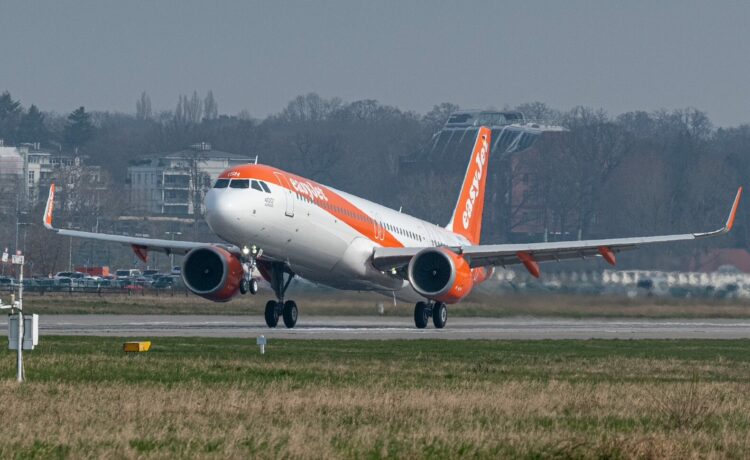
In what it describes as an ‘industry first’, low-cost airline easyJet, in collaboration with Rolls Royce, successfully runs a hydrogen-fuelled aircraft engine on full power. Tony McDonough reports
Low-cost airline easyJet has moved a step closer to commercial flights powered by hydrogen.
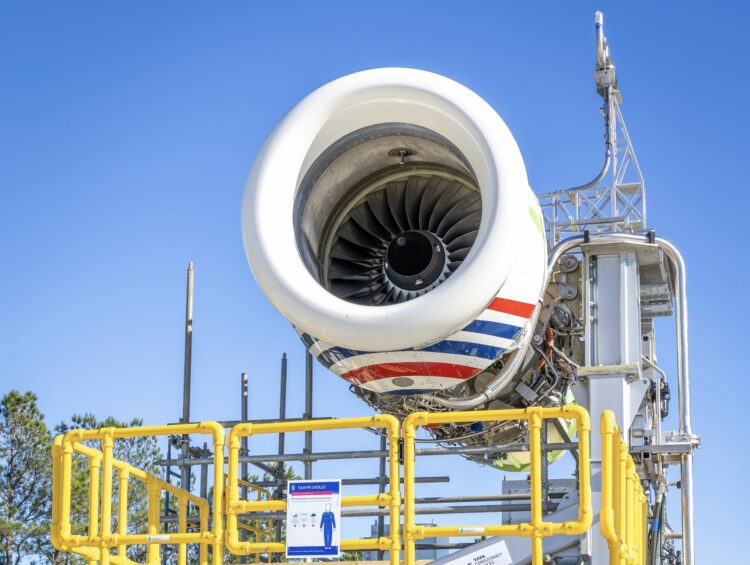
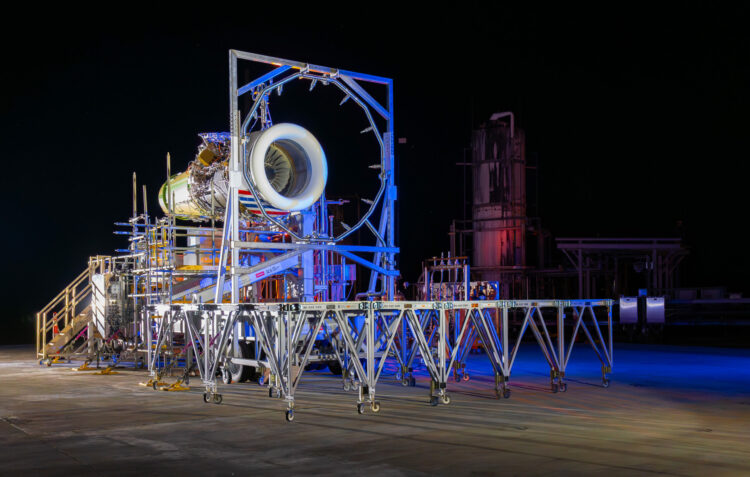
In a collaboration with Rolls-Royce, easyJet tested a modified Rolls-Royce Pearl 15 aircraft engine reaching full take off power while running on 100% hydrogen, at NASA’s Stennis Space Center, near Bay St. Louis Mississippi.
Describing the milestone as an “industry first”, easyJet, which operates 41 routes out of Liverpool John Lennon Airport, said the test marked a “significant step in efforts to reduce aviation emissions”.
This test was the result of a four-year programme between Rolls-Royce, easyJet and global partners to explore hydrogen as a potential aviation fuel and generate engineering insight for future propulsion applications.
The airline has played a central role in supporting the development of hydrogen gas turbine technology as part of its long-term decarbonisation ambitions.
Rolls-Royce’s expanded partnership with TCS helped accelerate progress towards its technology goals by adding capability and capacity across critical engineering workstreams.
During this phase of the testing programme, engineers demonstrated that a modern jet engine, scalable to power a narrowbody aircraft, can safely operate on gaseous hydrogen across a fully simulated flight cycle, including start-up, take-off, cruise and landing.
David Morgan, chief operating officer at easyJet, said: “This is a real testament to the progress our partnership with Rolls-Royce has achieved, taking hydrogen from early concept through to full engine build and successful testing in just a few years.
“Demonstrating 100% hydrogen operation at scale is a significant milestone and marks an important step towards easyJet’s net zero ambition, supporting the long-term transition to more sustainable aviation.”
The Rolls-Royce programme followed an incremental, technology-led approach to prove the fundamental technologies.
Progressing from early engine testing at Boscombe Down in the UK in 2022, the technology was scaled and further developed through a UK and European programme of component and system rig tests.
Earlier modifications also focused on adapting the engine to replace traditional jet fuel with hydrogen while considering both carbon and non-CO2 impacts through an expansive combustion programme.
READ MORE: easyJet to add ninth aircraft at Liverpool
READ MORE: Rolls-Royce to build three nuclear reactors in North Wales
Rolls-Royce has also received support for hydrogen research through the UK’s Aerospace Technology Institute, HyEST, RACHEL and LH2GT programmes, Germany’s LUFO 6 WOTAN programme, and the CAVENDISH program supported by InnovateUK and European Union’s Clean Aviation.
Adam Newman, chief engineer, Hydrogen Demonstrator Programme, Rolls-Royce, added: “This programme has given us the clearest understanding in the industry of how hydrogen behaves in a modern aero gas turbine.
“Through a collaborative, staged testing approach, we have validated combustion, fuel and control system technologies, and demonstrated the safe use of hydrogen through design, commissioning, maintenance and testing.”
Comments are closed.