
University of Liverpool secures £23.7m in Government funding for two innovation projects including a new high-growth chemical ‘super cluster’ and a hub dedicated to AI and machine learning. Tony McDonough reports
Two University of Liverpool innovation projects have secured £23.7 in Government funding for two cutting-edge projects.
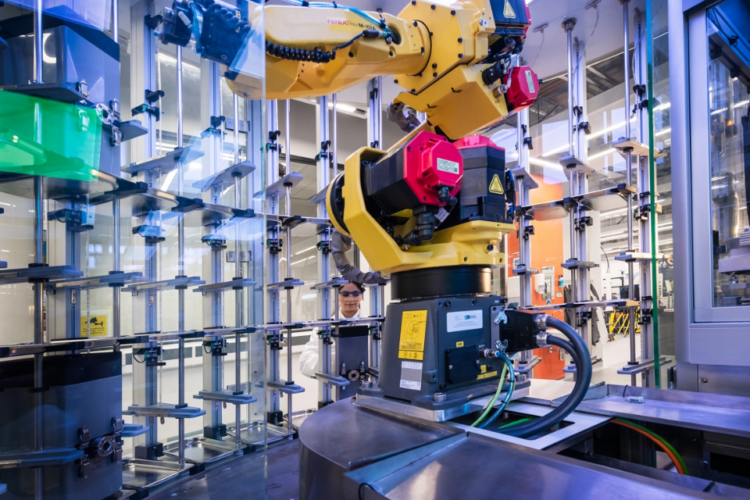
Coming from the Local Innovation Partnership Fund £15m will go towards the AIM-HI programme to build on the success of the Materials Innovation Factory and create a new high-growth chemical super cluster.
A further £8.7m is for the National Biofilms Innovation Centre: Liverpool Engine (NBIC-LIVE) programme to establish what is claimed is the world’s first centre of innovation excellence dedicated to AI and machine learning-enabled rapid innovation of antimicrobial and anti-biofilm surfaces.
Professor Tim Jones, Vice-Chancellor of the University of Liverpool, said: “This new funding recognises the power of partnership between universities, industry and civic leaders.
“Through AIM-HI and NBIC-LIVE, the University of Liverpool will help accelerate world-leading advances in AI-enabled materials chemistry and life science, while creating new opportunities for businesses, researchers and the Liverpool city region workforce.”
Led by UK Research and Innovation, the national £500m Local Innovation Partnership Fund is designed to support the development and scaling of high-potential, existing and emerging innovation clusters. In all £30m is being allocated to Liverpool city region.
All projects must involve academia, industry and government, and deliver real-world impact, advancing knowledge, improving lives and driving growth.

City region Mayor Steve Rotheram added: “This funding is a major vote of confidence in Liverpool city region and our position at the forefront of global innovation.
“We’re already building real strength in areas such as artificial intelligence and advanced manufacturing, and this investment will help us accelerate that progress – turning cutting-edge research into high-quality jobs and opportunities for our communities.”
READ MORE: Applied Nutrition reveals £12m US investment
READ MORE: Liverpool commodities firm upbeat despite losses
Critical to the UK’s manufacturing base and accounting for 9% of manufacturing jobs in the North West, the chemical sector faces challenges including translational gaps. AIM-HI will address these, bridging academic work on AI for chemistry and industry.
The NBIC-LIVE programme could establish the city region as a global leader in this field. Tackling biofilms – which are responsible for 80% of infections and major industrial costs – it will accelerate development and commercialisation of next-generation materials.
Comments are closed.