
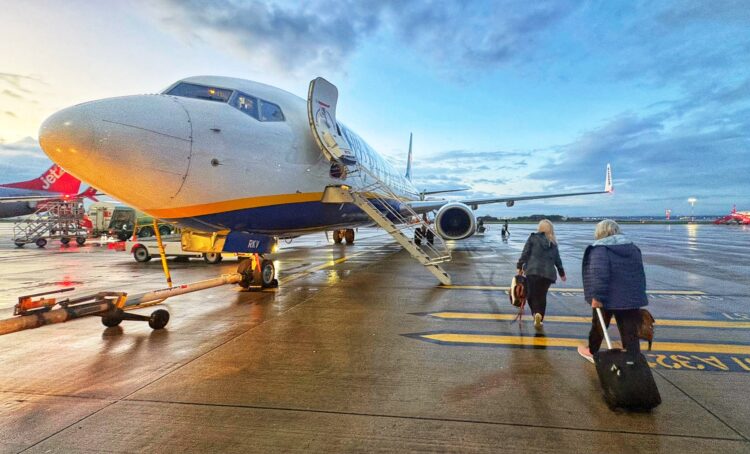
Liverpool John Lennon Airport is set to break its annual passenger record for the second year in a row – but airport growth poses major logistical challenges and LJLA has given LBN an insight into how that growth is managed. Tony McDonough reports
In 2025 Liverpool John Lennon Airport (LJLA) handled 5.6m passengers, 10% higher than the previous year and the highest number in its history.
Another record year is already secured for LJLA with last year’s total exceeded by the end of August. It is a phenomenal recovery from the dark days of COVID and is thanks to a growth in routes from airlines including Ryanair, easyJet and Jet2.
In 2027 the airport is also launching a fresh push to promote its Aer Lingus link with Dublin where passengers can get US customs pre-clearance before flying to destinations such as New York and Boston.
However, significant airport growth presents major logistical challenges for any airport and Liverpool is no exception. At LJLA these challenges are being tackled with investment, planning, meticulous preparation and use of digital technology.
In recent years the airport has gained a strong reputation for the level of passenger satisfaction and regularly tops, or comes close to the top, of league tables measuring customer experience.
According to Paul Staples, operations director at LJLA, simply increasing capacity to allow more passengers through isn’t enough in itself if the experience of those passengers diminishes.
He told LBN: “We know from the surveys and from the feedback we get that people actually enjoy flying from LJLA. As many of us know, travelling or going on holiday can be a stressful experience in itself. We aim to make it as stress-free as possible.
“That is probably the biggest challenge for us – to make sure each part of the journey maintains high customer experience as we grow. There is a lot of work that goes into that and it is ongoing. We don’t allow ourselves to ever get complacent.”
Paul says every process is modelled before passenger numbers increase so each one can be resourced properly with people or technology. This is critical in areas such as check-in, security, the border and the boarding gates. Passenger flows are analysed and capacity adjusted as needed.
“That process of continual monitoring and improvement also becomes important as passengers move into the departure lounge,” added Paul. “Is there enough free seating, is there enough space in bars and restaurants?
“Once we have identified where changes need to be made that work has to be carried out with minimal disruption. Changes or new installations tend to take place overnight during the less busy period, although we are getting busier during those periods as well.”
LJLA also uses digital technology to test the limits of its capacity. The model will push an area to breaking point so the team has a grasp on what the limits are before they are implemented for real. This process is known as ORAT – operational readiness and transition.
Once that modelling is completed there are real life-tests involving people in that area to see how something will work in reality. One example was the installation of new toilets in departures. Both the engineering and cleaning teams provided input during the design phase.

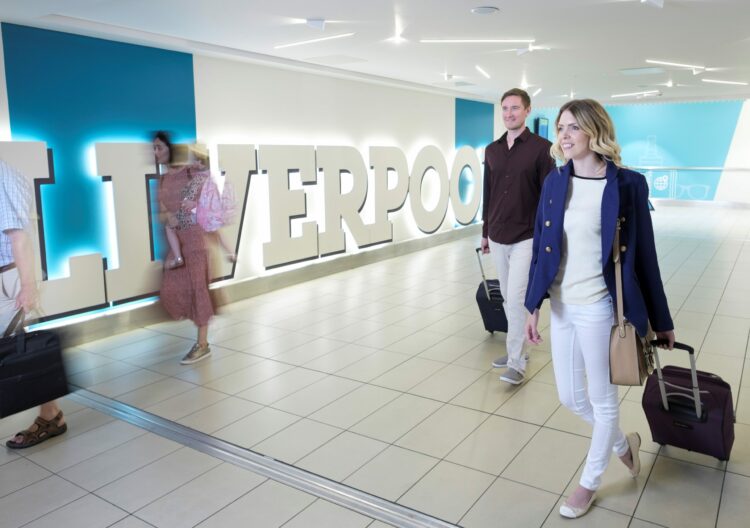

Paul also said: “Some areas are more about clever thinking. For example, we used behavioural specialists to help design wayfinding and security flows. In security we installed new CT x-rays, longer lanes, tray returns and scanners to improve flows.
“Our departure area has had a multi-million pound facelift of most, if not all concessions and in the border area we are already with the UK Border Force to be the second airport in the UK to install the latest no contact border e-gates.”
Airlines are continuing to increase both the number of aircraft on the ground and the number of routes. LJLA is expanding capacity at its fuel farm to cope with that growth.
In January 2027 the check-in area will undergo a facelift and new kiosks will ensure quicker check-ins from next summer. New gates are also being installed to enable two to four more aircraft to be boarded during the morning peak.
READ MORE: Eight new routes announced for Liverpool Airport
READ MORE: ‘Beatles economy’ worth a Fab £211.3m a year to Liverpool
Paul explained that projects involving major change sees planning and co-ordination take place up to a year or more before implementation. And that co-ordination is with both internal colleagues and external entities.
“We coordinate daily, weekly, monthly and quarterly with our airline and handling agent colleagues,” he/she said. “We also coordinate closely with our airport police teams and border teams particularly where football traffic is concerned.
“Our development team present project plans way in advance of anything ever actually happening and we are already well equipped to handle another rise in passenger numbers once the gates and border areas are upgraded.”
Comments are closed.