
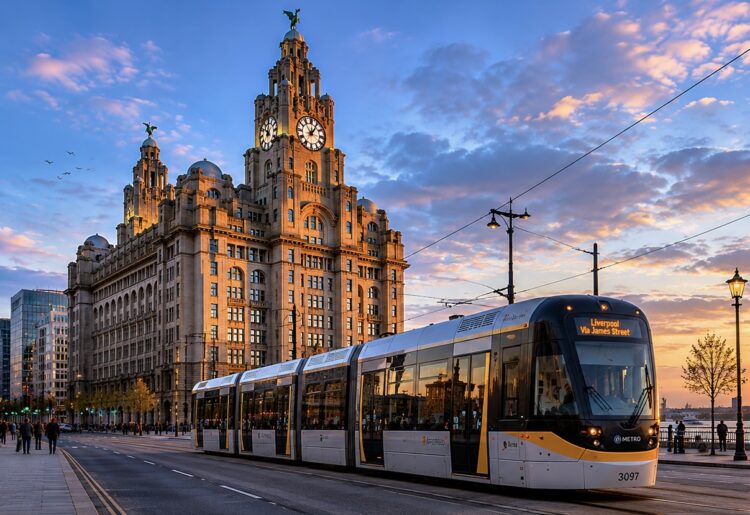
Ballooning costs and political infighting led to the collapse of Merseytram 20 years ago – now, writing for LBN, local manufacturing entrepreneur Greg Johnson says we CAN revive the trams, a plan Mayor Steve Rotheram claims would cost £2bn
This month I attended the first Mayor’s Question Time event with our city region Mayor Steve Rotheram at the Plaza Cinema in Crosby.
It was a lively affair, as you might expect, and I was impressed that Steve was prepared to put himself in front of a real audience and answer direct questions. In our current febrile political environment it is a brave thing to do and we need to see more of it.
I was also pleased that Sefton was the first stop – a stones’ throw from my business in Bootle, window and door factory Warwick North West. We are a thriving business that employs over 120 people – largely, but not exclusively, from the surrounding area.
How easily people can get around the city region is important to me as an employer. Excellent public transport links open up opportunities for people to seek jobs across the boroughs.
So, I was excited to hear the question of transport raised at the Question Time event and, in particular, the subject of trams. Liverpool’s last tram ran in 1957 with the iconic ‘Dockers’ Umbrella’ Overhead Railway ceasing operations a year earlier.
Decades later people across Merseyside are still keen for trams to return. When the subject came up on the night, I leaned forward in anticipation of what Steve’s answer might be.
He said he shared the public’s affection for trams and was envious of the Metrolink network in Greater Manchester. But he added that such a network would likely cost around £2bn, would require an Act of Parliament and wouldn’t happen until 2040.
It was a fair, honest and realistic response but since that night the same phrase keeps coming into my head… “let’s dare to dream and do it anyway”.
Back in 2001 plans for a three-line tram network were unveiled linking the city centre with north Liverpool, Prescot and Liverpool John Lennon Airport. In 2002 Tony Blair’s Labour Government pledged £170m towards the £225m cost.
However, as a later auditor’s report would note, the project was poorly managed. The overall cost ballooned to more than £360m and, amid political infighting among Merseyside councils, the Government pulled the plug on the project in November 2005.
Not only was the failure an embarrassment for the region, it left Merseytravel (now part of the Combined Authority) with a £75m bill which took many years to be paid off.
Whitehall mandarins have long memories, and it is likely the Government will take some persuading to back Merseytram mark 2. But that doesn’t mean we shouldn’t try. We should be reaching for the best that we can get.
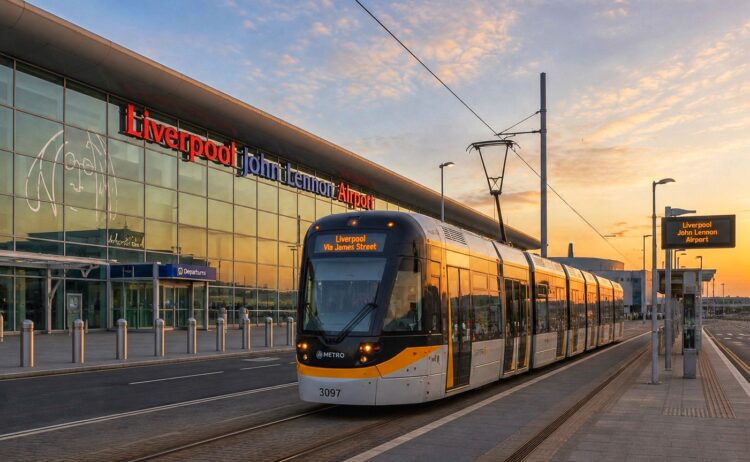
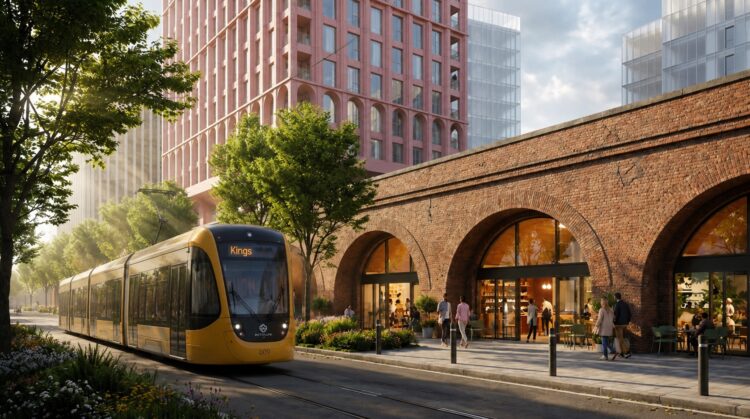
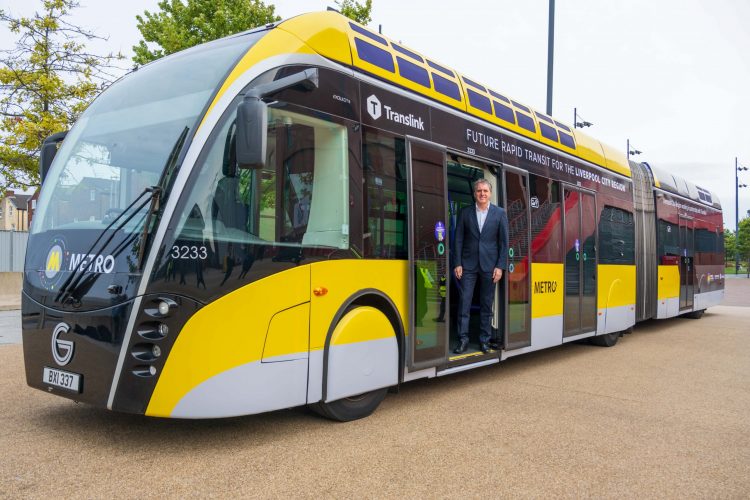
The Mayor’s current alternative to a tram network is the £100m Glider project. This will see battery-powered vehicles link the city centre with Liverpool John Lennon Airport and Liverpool and Everton FC stadiums by the end of this decade.
These Gliders, which operate in Belfast, can carry around 30% more passengers than an average double decker bus. They look like trams but have wheels and are designed to operate on roads, running in dedicated lanes.
This is a good medium-term solution and will certainly help with getting people to and from the stadiums and the airport. But light rail is still seen by many as the gold standard and I think we need to keep pushing for it for the city region.
This isn’t about nostalgia. It is about building a modern, rapid transport system for a city region that is in a much better position to benefit economically than it was when Merseytram was proposed in 2001.
Our visitor economy is now worth £6bn a year. In 2001 the city centre had little more than 2,000 hotel rooms – now we have more than 10,000. Liverpool John Lennon Airport, one of the vital engines of our economy, handled more than 5.6m passengers in 2025 – the highest number in its history.
It is hardly ideal that people arriving in the city by plane have to get on a bus outside the terminal, and then get off again at South Liverpool Parkway to catch a train to the city centre.
Liverpool’s arena and convention centre, which didn’t exist in 2001, is looking to attract conferences and events from around the world. And I don’t need to remind anyone of the ongoing issues with Everton fans getting to and from the new Hill Dickinson stadium – an issue that has impacted residents and businesses in its wake.
Imagine a tram running from the airport all the way to the centre of Bootle, a rapid journey with a capacity for passengers far exceeding that of a bus. It would ease congestion on the roads and reduce CO2 emissions.
And the multiplier effects of well-planned light rail networks for city regions are well documented. It is the kind of infrastructure that boosts investor confidence and encourages development.
Steve Rotheram has already shown that he is not short on ambition. Bus franchising, the biggest change in 40 years, is about to become a reality and a fleet of new electric buses has just taken to the streets.
There are new stations on the Merseyrail network and a new £500m train fleet. I urge him to take the next step and push to bring trams back to our city region.
Comments are closed.